
Old City
Jerusalem Old City – Frequently Asked Questions (FAQ)
Download the full brochure as PDF file
Why not have each religion – Jewish, Christian, and Muslim – care for its own heritage?
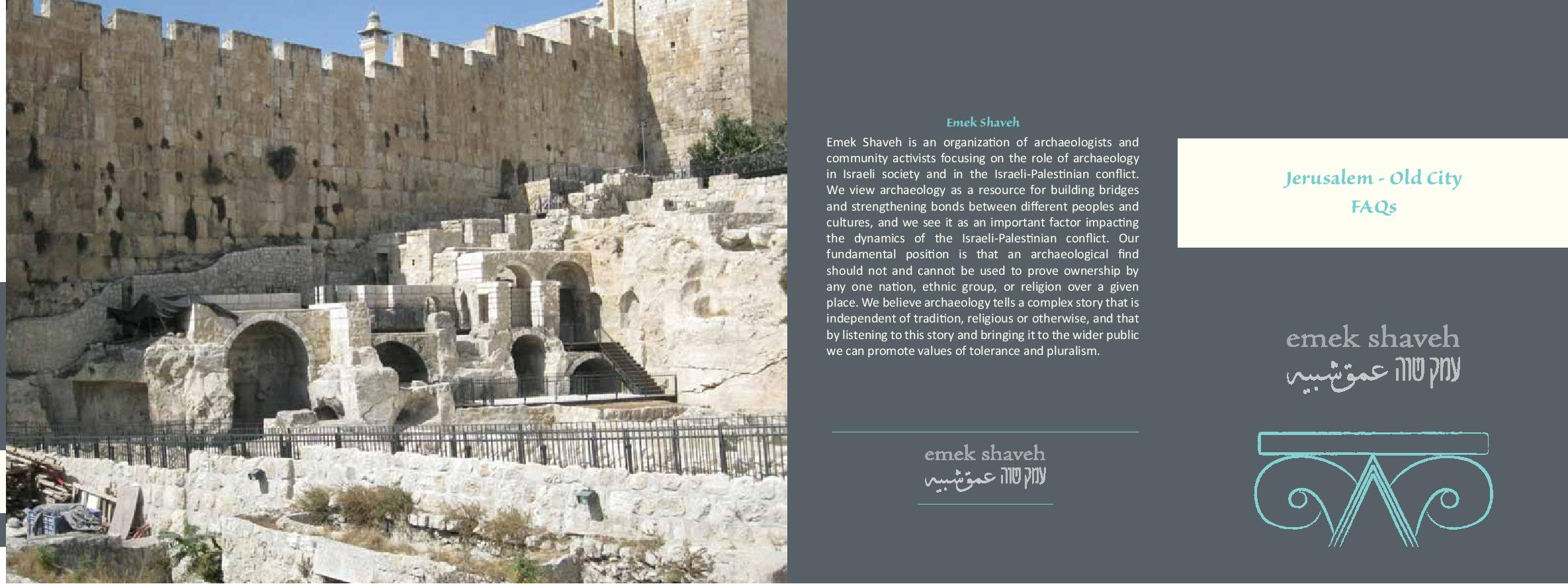
As in every historical city, periods and cultures in the Old City of Jerusalem are intertwined, above the surface as well as below. There are those who would wish to promote the existence of an authentic Jewish Jerusalem hidden beneath the Muslim city; one that can be accessed in the tunnels of the ‘City of David’ and the Western Wall. But that is an illusion: the vaults and tunnels are not all of the same time, and most are modern creations, made up of Ottoman period cisterns, Mamluk vaults, and rock-cut installations of Roman date or earlier.
A denominational division might work for religious buildings (and even those are often shared). But archaeology needs, on the one hand, the protection of ‘color-blind’ legislation (which doesn’t value one culture over another), and on the other – the protection afforded by a mutual respect for heritage based on the understanding that buildings and ancient remains might have different significance for different people, and that their mere age does not determine their value.
Between Holiness and Propaganda: Archaeology and political claims over the Old City of Jerusalem
Archaeological excavations are tied to the political conflict in Jerusalem from two distinct aspects: one is the appropriation of land to be excavated, which can be interpreted as a means of control over a certain place or area. The second is the focus on the past, which can be seen as an instrument for appropriating the past to one particular group and its narrative. For these reasons, all archaeological activity in the Old City of Jerusalem is perceived as threatening and political. Nonetheless, the excavations do not all impact on the political situation to the same degree. Some are conducted in light of residents or merchants’ needs, are limited in their range and do not turn into national projects.

While reviews of specific archaeological excavations and their implications abound, the chapters in this booklet offer a broad picture of the local archaeological projects. As we understand it, focusing on one event or archaeological dig does not permit an inclusive view of the full complexity of the situation, which must be comprehended in the context of socio-economic conditions in the Old City, its density, and the political battle for sovereignty.
As far as archaeology in the Old City of Jerusalem goes, it appears there is no end to research options. In this publication we concentrate on the effect of central digs in the Old City, digs whose placement and size exacerbate the surrounding divisions. The information is offered in three parts. The first chapter deals with the main recent excavations in the Old City; the second focuses on archaeology in the holy sites; the third describes the digging of tunnels and caverns underground beneath the busy streets of the Old City and Silwan village.
To read the full report, please see the following links:
Chapter 2: Archaeology in the Central Holy Sites in the Old City of Jerusalem
Download the full report as PDF

Underground Jerusalem: The excavation of tunnels, channels, and underground spaces in the Historic Basin
The majority of the area of the Old City is densely built. As a result, there are very few open spaces in which archaeological excavations can be undertaken. From a professional standpoint, this situation obligates the responsible authorities to restrict the number of excavations and to focus their attention on preserving and reinforcing existing structures.
However, the political interests that aspire to establish an Israeli presence throughout the Old City, including underneath the Muslim Quarter and in the nearby Palestinian village of Silwan, have fostered the decision that intensive underground excavations must be undertaken in the Historic Basin of Jerusalem, especially in the Old City and in Silwan. These excavations focus on highlighting the Jewish connection to ancient Jerusalem, and creating an underground city that undermines the city above.
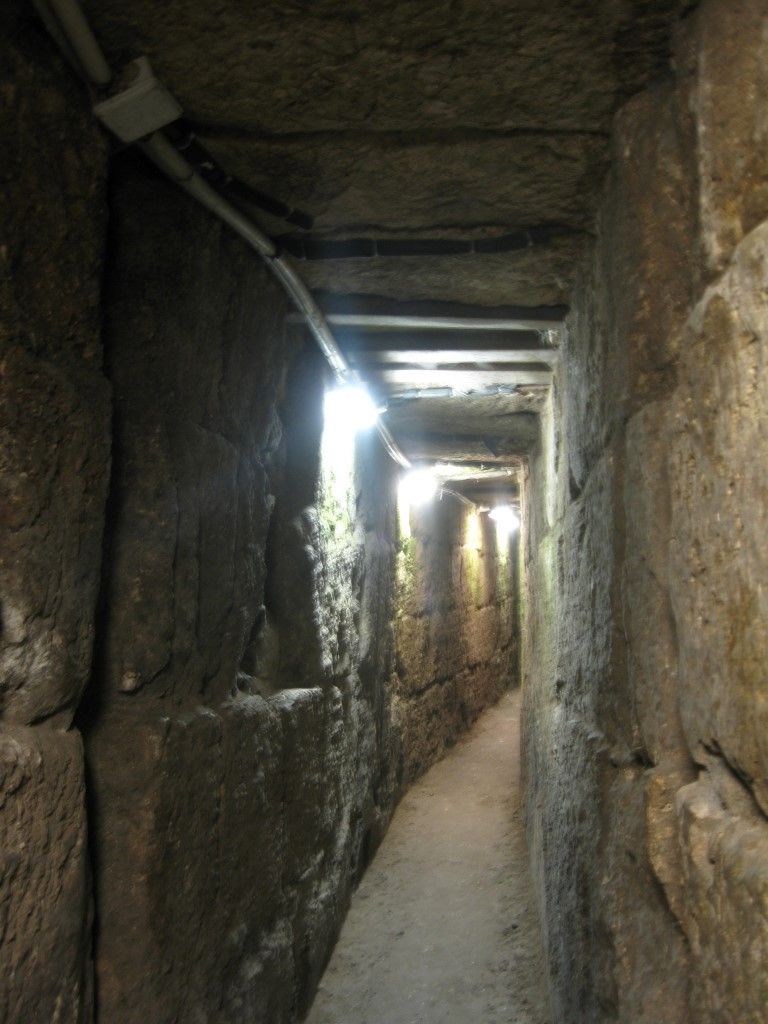

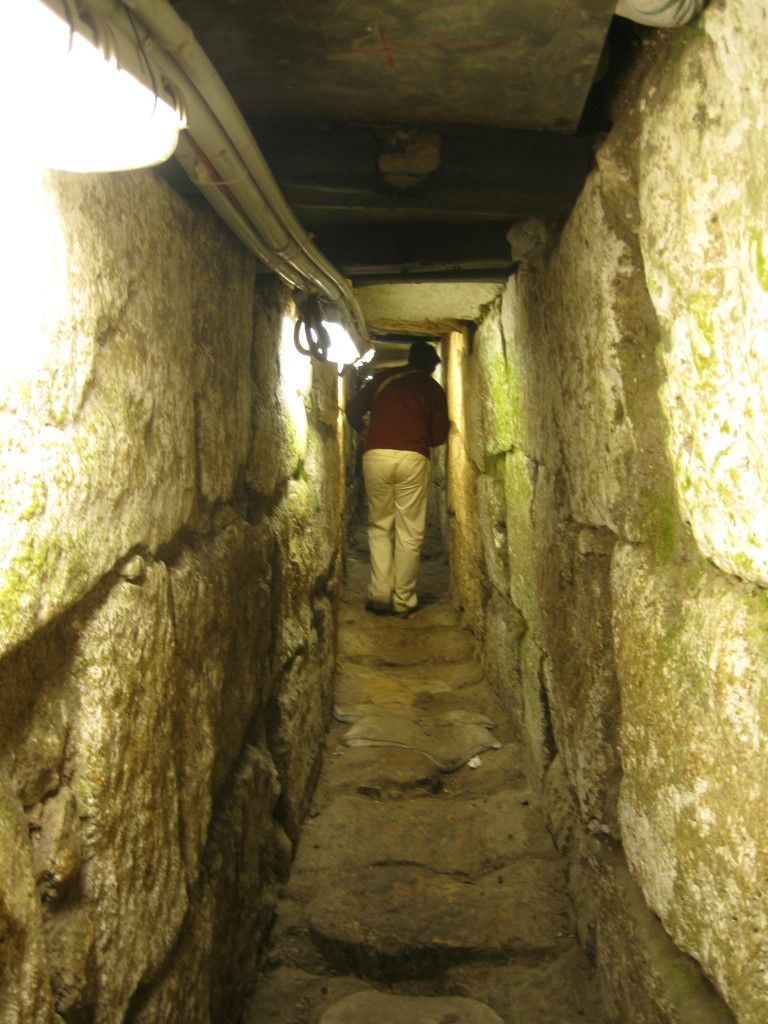
From 2007 until today the Israel Antiquities Authority (henceforth: IAA) has focused the bulk of its efforts in the Historic Basin on creating a system of channels, tunnels, and underground spaces. Under the guise of academic excavations, the IAA is preparing the groundwork for tourism with political overtones. Though it is ostensibly engaged in scientific archaeology, the IAA does not provide reliable information regarding the location of excavations, their scope, or their objectives. The majority of this information is only available after-the-fact, in the form of IAA press releases, and not during the course of the excavations themselves as one would expect from a public body working in a city center.
This report aims to provide an updated survey of the underground excavations in the Historic Basin. We suspect other areas are also being excavated in addition to those described here, but we lack reliable information concerning these sites. The excavations underway underground and in the dark are considered as Israeli attempts to undermine Palestinian ownership, and as a means to prevent a political solution in Jerusalem.
Download the full report Underground Jerusalem as PDF file
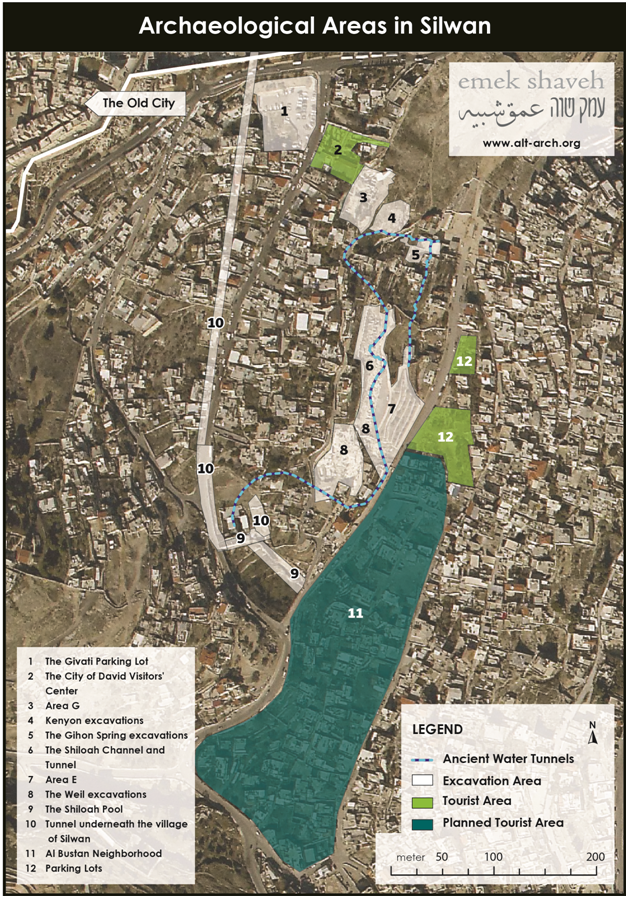
Archaeological Excavations In Jerusalem’s Old City and Its Environs
The Old City offers its visitors a great variety of antiquities from different periods and cultures. There is an ancient city wall from the 8th century BCE, and remains from the 2nd Temple period. The street layout of the Old City dates back to the Roman Aelia Capitolina of the 2nd century CE, and the impressive public buildings which give the Old City its unique character were built during the Mamluk period. The wall surrounding the Old City was built by the Othman sultan, Suleiman the Great, in the 16th century on the ruins of older walls from the Crusader and Roman periods. Such a rich past is laden with a multitude of meanings – historic, religious, national and political.
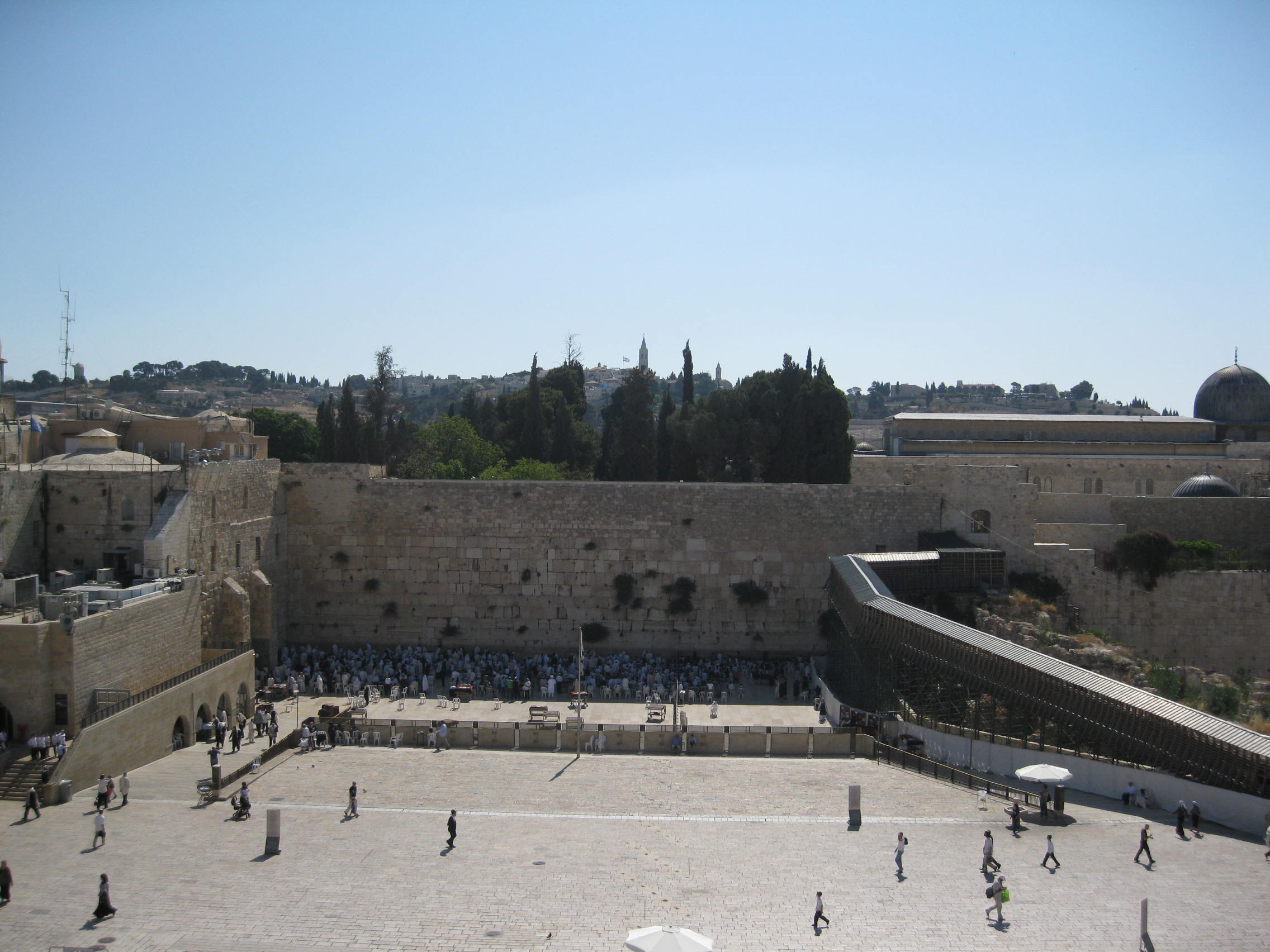
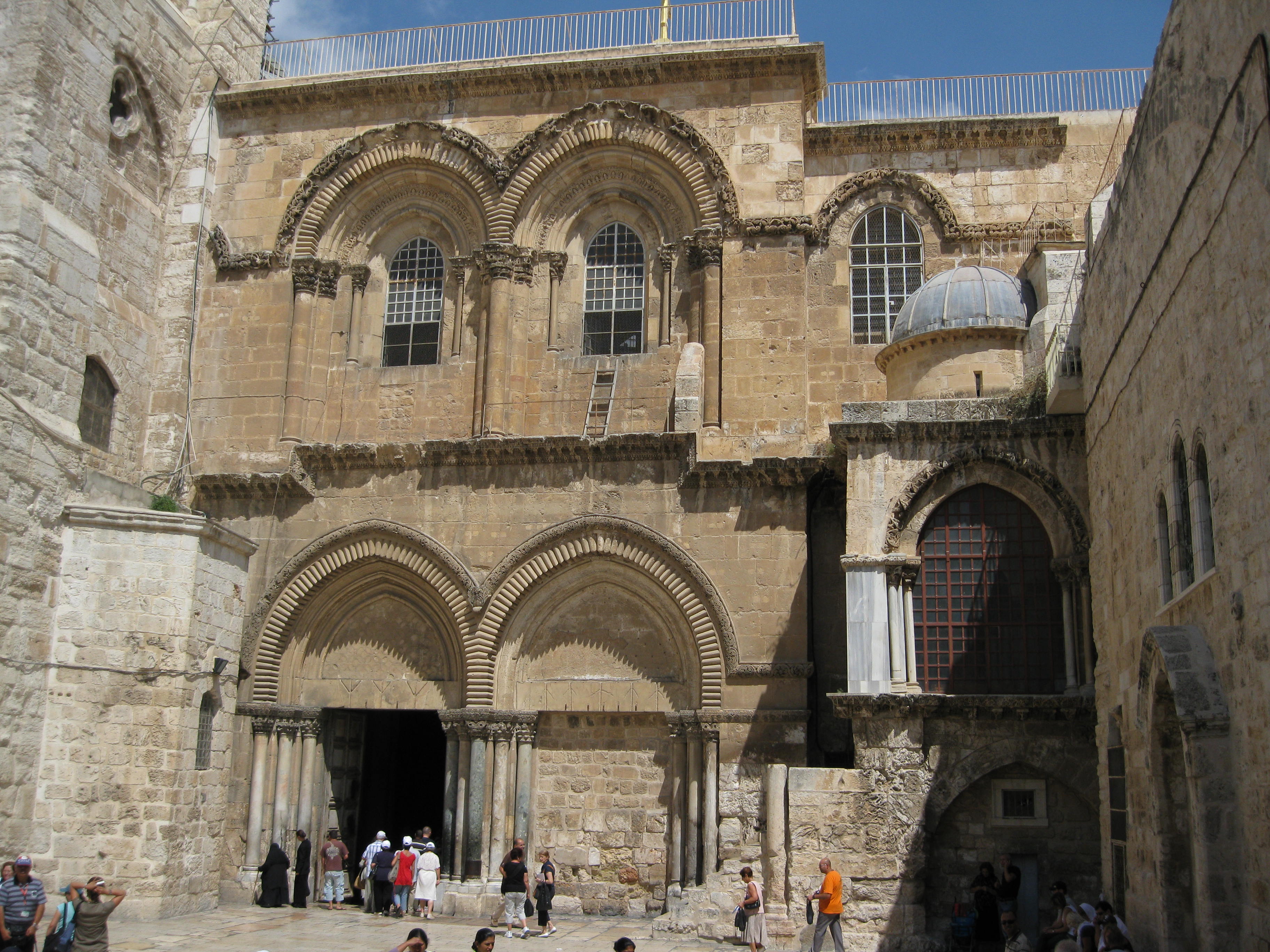
Sovereignty over the Old City and the historic basin carries with it responsibility for preserving and presenting all the different past and present cultures that were or still are part of the place. For the sake of the archeological research itself, as well as for political and social reasons, it is important to carry out the excavations in the most professional and careful way. The amount and intensity of the excavations in the Old City and the historic basin should be kept to a minimum, so as not to disrupt the delicate balance between the present and the past, between the living and the dead. Cooperation between the Israeli authorities, local residents and international organizations is essential, as only such cooperation could ensure that archeology will be removed from the political frontline and used instead as a bridge, for bringing closer all the nations and cultures which shaped Jerusalem’s past and care about its future.
International Guidelines and Conventions for Cultural Heritage Protection
Currently, there are five main international conventions which regulate the protection of cultural heritage[1], the main issues being intended and unintended destruction during armed conflict, plunder and illicit trafficking of cultural objects, and the active preservation and management of cultural heritage. The basic assumption for the development of these conventions is that cultural heritage should not be regarded as purely a local, ethnic or national asset, but belongs to mankind as a whole and needs to be preserved for future generations. The 1954 Hague Convention for the Protection of Cultural Property in the Event of Armed Conflict states in its preamble that “damage to the cultural property belonging to any people whatsoever means damage to the cultural heritage of all mankind”.
Download the full report as PDF
Extreme Exposure: Archaeology in Jerusalem 1967–2007
Raphael Greenberg, Department of Archaeology and Ancient Near Eastern Cultures, Tel Aviv University, Israel
A long series of excavations has been carried out since 1967 by Israeli archaeologists in ‘unifi ed’ Jerusalem. Proponents have characterised this work as revolutionary and inspired by ‘a free academic spirit’; critics have viewed it as part of the ‘Jewish-colonial-nationalist project’. The truth of these views, which are not mutually exclusive, lies very much in the eye of the beholder. Despite the unifi ed legal framework governing the excavation of Jerusalem, there is neither a single outlook nor an overarching plan in its conduct. Different excavators — and perhaps more signifi cantly, different development agencies — have worked to different ends in Jerusalem, using a wide variety of means.
Three stages may be discerned in the conduct of archaeological work in Jerusalem since 1967. The first two, spanning the fi rst three decades or so of Israeli presence in East Jerusalem, may be characterised, by and large, as ‘official’ in outlook, i.e., governed by concerns of the central government and by the municipal leadership; the third, spanning the recent decade, is highly factional in outlook, i.e., governed by the pressures exerted on an increasingly decentralised authority by special interest groups, primarily those of the ideological-religious right. The conclusion of this paper puts forward some ideas for alternative action by archaeologists in Jerusalem, based on current concepts of best archaeological practice and on a proactive stance on archaeological ethics.
Remaking the City: Archaeological Projects of Political Import in Jerusalem’s Old City and in the Village of Silwan
During 2013, the Israeli authorities and the settlers’ organizations continued advancing archaeological excavations and tourist projects in the Old City and in the Village of Silwan – the “Historic Basin of Jerusalem.” Most of the excavations and projects are a continuation of previous years’ activity. As we have made known in the past through our publications, the archaeological excavations, exposure of the tunnels and construction planned for the area are part of a multi-year government plan intended to strengthen the Israeli hold on the Old City and to create facts on the ground, the goal of which is to impede on the attempts to reach a political solution for the historic basin.


Alongside the excavations, which have been continuing for many years, such as the Givati Parking Lot, the Spring House and the tunnels, the Israeli authorities and settlers’ organizations, mainly Elad, are initiating new excavations located between old excavations – for example, the excavation between the Spring House and Warren’s Shaft in Silwan, or the new tunnel being excavated west of the main tunnel that crosses the Village of Silwan. Other excavations, separate from known excavation areas, such as the Tel Aviv University excavations, also constitute part of the program of expanding Israeli control of the historic basin.

In this document, we present the developments and changes that have occurred during 2013. In some of the sections we will provide a link to previous reports published by Emek Shaveh, which described in detail the significance of a particular site and its political importance, both separately and as part of the overall Israeli plan in the historic basin.
Comments on UNESCO resolution regarding Jerusalem at UNESCO General Conference, 37th session, Paris 2013
The following text are the relevant paragraphs relating to Jerusalem as they appear in the draft resolution of 6th of November 2013, which was submitted by Palestine and the UAE and approved at the General Conference according to news reports (the final resolution document is not yet available on UNESCO’s website).
Item 5.2: Jerusalem and the implementation of 36 C/Resolution 43
Recognizes the concerns raised about the Israeli archaeological excavations and works in the “Old City and on both sides of the walls” of the Old City of Jerusalem and its Walls;
Invites the Director-General to pursue her efforts with the parties concerned for the safeguarding of the outstanding universal value of the Old City of Jerusalem;
Recalling that this item is included in the agenda of the 194th session of the Executive Board,
Invites the Director-General to present to it at its 38th session a progress report on the implementation of the UNESCO Action Plan for the Safeguarding of the Cultural Heritage of the Old City of Jerusalem, and decides to inscribe this item on the agenda of its 38th session.
Our comments:
1. UNESCO states clearly that the World Heritage Site in Danger status applies not only to Jerusalem inside the Old City Walls but also in the area outside the wall, ie the Givati Parking lot and other excavations that are carried out in Silwan.
2. The request to “pursue efforts” and “present a progress report on the implementation of the UNESCO Action Plan” implies that the decision to send a Reactive Monitoring Mission hasn’t been cancelled but is still on the table. Although this is not expressly stated in the resolution it appears in the overview/background document, 37C/16.
Attached are two PDF documents, the draft resolution from 6th of November 37C/COM.CLT/DR2 and 37C 16 with the relevant paragraphs highlighted in yellow.
Another Future for Antiquities: Conservation of Antiquities Sites – Suggestions towards a Partial Solution of Jerusalem’s Political Problems
In this document, we wish to evaluate the possibility of preserving the archaeological sites in Jerusalem’s historic basin while taking into consideration the needs of the residents, the various interest groups and the entailing political considerations. Our goal is to offer a fresh political alternative to the way in which archaeological excavations are currently being used. In the first part of this document, we will discuss accepted approaches to the preservation of antiquities in world heritage sites in areas of conflict. In the second section, we intend to focus on the test case of the excavation site known as “The Givati Parking Lot” in the village of Silwan, near the walls of the Old City. This is the largest excavation site that exists today in the historic basin of Jerusalem, as well as one of the most controversial.


The suggestions relating to the archaeological excavations being carried out in the Givati Parking Lot are examples of a concept based on the preservation and protection of antiquities, together with careful consideration of residents’ needs and the creation of a balance between political forces in Jerusalem’s ancient sections. Collaboration between as many entities as possible in managing the Givati Parking Lot may not only lead to a weakening of extreme groups operating in the Old City at present, but also serve as a basis for dialogue and cooperation between the different political entities. Archaeology is a key means for recognizing the multi-cultural character of Jerusalem.
A broad discussion on the preservation of antiquities in Jerusalem’s Old City could strengthen recognition of the right of minorities and stakeholders whose opinion is not heard, not only in area of urban conservation, but also as partners with equal rights. Seemingly, in the long term a reexamination of the manner in which antiquities and excavation sites in the historical basin are presented will be unavoidable, and an understanding that alongside the will to expose and excavate, it is also vital to take into consideration the needs of the residents and the interests of other stakeholders. In this manner, although the topic of the present document is the preservation of antiquities in the historic basin, the many aspects of this field have a decisive impact on the future of the historic basin and the chance of a political solution acceptable to all parties.
David’s Tomb on Mt. Zion
In January 2013, the tiles that decorated the walls of David’s Tomb were methodically destroyed in an act of vandalism. The tiles were the remnants of a unique decoration from the 17th century – the Ottoman Period. The destruction was carried out with the goal of removing any Muslim element and strengthening the Jewish face of David’s Tomb. The inter-religious tension at David’s Tomb, and use of vandalism of the antiquities as an expression of this tension, did not begin with the destructive act in January 2013. Over the past decade, there has been a noticeable rise in tension between Jewish visitors and residents of Mt. Zion vis-à-vis Christians and Muslims there.
David’s Tomb, like other holy sites, such as the Temple Mount in the Old City or the Tombs of the Patriarchs in Hebron, is thousands of years old, and built layer upon layer. These sites were never properly excavated or researched. The religious tension and political interests make it impossible to relate to these structures as antiquities sites; their holy status clouds the research. As we have illustrated in the case of David’s Tomb, some of the information originates in the most limited excavations, and most is from archaeological surveys or historical sources.


Jewish, Christian and Muslim traditions mingle together at David’s Tomb. This is evident in the architecture of the tomb building, and the Coenaculum. Since David’s Tomb is not located in the heart of a political conflict, like the Tombs of the Patriarchs in Hebron or the Temple Mount / Haram a-Sharif, one might expect Israel to uphold its obligation to protect the structure from vandalism by extreme elements. Despite this, the authorities have failed in fulfilling this mission, and the sense is that the situation that has arisen is convenient for the government, or at least, the authorities have come to terms with the damage to the site.


The case of David’s Tomb is a test case for Israel’s ability to foster religious tolerance. It appears that greater international involvement in the compound will emphasize the international importance of the site. Such involvement could serve as a counterweight to extreme Jewish groups which are unprepared to accept a lifestyle or beliefs that are different from their own. Israel would do well to prove to itself and to the world that it is capable of protecting a site holy to all three faiths, one that is located outside of the political conflict, and that it does not enable extreme groups to determine the nature of the place. However, as mentioned above, it is impossible to detach the location of Mt. Zion and David’s Tomb from the adjacent Old City. The political struggle in the Old City, which brings about national and religious extremism, also reaches David’s Tomb. It appears that as long as there is no political accord in the Old City, the phenomena of the strengthening of extremist groups will be an inseparable part of the atmosphere at Mt. Zion and the tomb compound.
Why is the Mughrabi Ramp a political issue?
In early September, the newspaper Haaretz published an article about the dismantling of a new Mughrabi ramp whose construction began in August. That ramp, like the existing one, was declared as a ‘temporary’ structure. Since the collapse of the prior Mughrabi ramp in 2004, the issue of constructing a new ramp has become politically sensitive. Israel claims to have a right and an obligation to build a new permanent ramp, while Jordan, in charge of the Muslim Waqf on the Temple Mount/ Haram al-Sharif, claims the ramp would harm the Muslim autonomy there.


As in many cases around the Temple Mount/Haram al-Sharif, the issue of the ramp itself has become part of the struggle over ownership and sovereignty: of who has rights to the Old City. It seems that the solution for the ramp’s construction is part of maintaining the status quo on the Mount. As long as the Muslim Waqf feels that its position on the Haram al-Sharif is undermined, it would be difficult to present the construction of the ramp as an action that is not part of a specific political goal.
The Palestinian–Israeli Draft Agreement on Archaeological Heritage: Restarting Discussion on Jerusalem’s Historic Sites
This document proposes a management plan for ancient sites in Jerusalem’s Historic Basin. The cooperation of Israelis and Palestinians in this effort is seen as a means to strengthen moderate voices on both sides. Professional bodies’ and policy-makers’ involvement is key to the plan’s implementation and success.
Cooperation between Israeli, Palestinian and international cultural heritage professionals on the basis of the PIDAAH document can make an important contribution to relieving tensions, and even create a positive environment for progress towards a political solution in Jerusalem. Crucially, although the management plan applies to the current situation in Jerusalem, we believe it can pave the way for inclusion in any final-status framework. While Palestinians stand to gain recognition and involvement in the heritage of Jerusalem, this plan will also include international recognition of the Jewish people’s heritage in the area.
The Temple Mount/Haram al-Sharif – Archaeology in a Political Context
Immediately after the 1967 War, then Israeli defense minister Moshe Dayan declared that the Islamic Waqf would retain their authority over the Temple Mount/Haram al-Sharif compound. This statement coupled by the fact that the Islamic Waqf continued to manage the compound was interpreted as Israel’s acquiescence to preserve the Haram al-Sharif’s unique historic significance as an Islamic holy site. Yet in practice, even prior to Dayan’s declaration, Israel had begun to put facts on the ground which contributed to a shift in the independent status of the Temple Mount/Haram al-Sharif particularly around the issue of access to the site.
Since 1967, the area surrounding the Temple Mount/Haram al-Sharif has seen continuous development and attempts to modify previous agreements. Activities that have affected the status quo which are most familiar to the public are the tunnel excavations, the renovations of al-Marwani Mosque (also called Solomon’s Stables) and the Mughrabi Ramp, but there have been other smaller-scale actions that have contributed to creating a new reality in and around the Temple Mount.

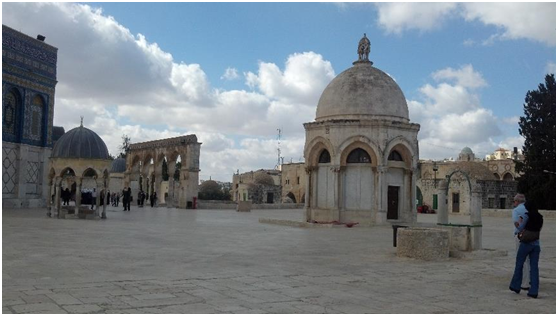
The Temple Mount/Haram al-Sharif is not detached from the environment in which it is situated. Events in the Old City and in the village of Silwan are known to have a significant impact on tensions in the area and particularly on the situation at the Temple Mount/Haram al-Sharif. Emek Shaveh has discussed activities in the area around the Temple Mount in “From Silwan to the Temple Mount” (2013)[1] and “Jerusalem Underground” (2011).[2]
In the present document we will discuss the use of archaeological excavations, or excavations termed as archaeological, in the political struggle over the Temple Mount and its environs. Considering that any physical activity in the Old City and its surrounding area entails archaeological work (excavations, preservation, oversight etc.), it is only natural that this scientific discipline has been placed at the forefront of the political struggle.
To download the full report as PDF
[1] Y. Mizrachi, “From Silwan to the Temple Mount – Archaeological Excavations as a Means of Control in the Village of Silwan and in Jerusalem’s Old City,” Emek Shaveh, 2013.
[2] Y. Mizrachi, “Jerusalem Underground: The Excavation of Tunnels, Channels, and Underground Spaces in the Historic Basin,” Emek Shaveh, 2011.
Denial of Access and Worship on the Temple Mount / Haram al-Sharif in 2012-2014
In this document we present a summary of the instances when worshipers and visitors were denied access to the Temple Mount / Haram al-Sharif by Israeli police in 2014-2012. Emek Shaveh received the information following a request filed to the police. According to the information, the restrictions apply to two categories: visitors and worshipers. “Visitors” are all non-Muslim (including Jewish) tourists and the general public that comes to the Haram. The term “worshipers” refers to Muslims. This division is based on the status quo from 1967, which determined that the Haram al-Sharif/ Temple Mount will continue to serve a complex of prayer exclusively for Muslims.
The data shows that when there are political and security tensions in Jerusalem, the status quo on the Temple Mount / al-Haram al-Sharif is harmed. For example, in 2014 the Israeli police imposed age restrictions on worshipers 41 times. This amounts to nearly 15% of the year. This number indicates that the feeling among Palestinians that Israel is changing the status quo in the area, is backed up by police data, even if the restrictions are made due to extenuating circumstances, such as the murder attempt of Yehuda Glick. At the same time there is a direct link between rising restrictions on visitors in 2013 and 2014 and increasing attempts by right-wing groups to upset the status quo in the area.
Tourism and Sacred Sites: The Davidson Center, the Archaeological Park and the corner of the Western Wall
In the archaeology of tunnels in East Jerusalem double standards are the norm. What is considered excellent roofing (in the case of “Beit Haliba”) wreaks actual devastation (in the case of the Archaeological Park). The Elad Foundation has a hold over the subterranean layers (in the Davidson Center and along the Western Wall), but the residents of the Muslim Quarter do not have any say over the ground underneath the floors of their private homes.
When the agreement to transfer management of the Archeological Park and the Davidson Center to Elad was publicized and then discussed in court, the IAA’s voice was not heard in public. This silence has aided Elad’s cause. Theoretical statements about objectivity and scientific truth are meaningless because in fact the activities of the IAA in East Jerusalem are promoting the interests of extremist nationalist organizations. The cooperation between the Israel Antiquities Authority and the settlers’ foundations, first and foremost among them the Elad Foundation, is granting the one-sided nationalist narrative legitimacy even at the Davidson Center. Moreover, this cooperation strengthens the Elad Foundation in the process of taking over sites of historic and archaeological significance in Jerusalem’s historic basin and allows it to edge closer to the most sensitive site in the area – the Temple Mount, as well as to the most important site for the Jewish people – the Western Wall.
In our opinion it is important that the Davidson Center, like all the other archaeological sites in Jerusalem, exhibit the beautiful remains that were discovered in this city – through all its periods and from all cultures.
Download Tourism and Sacred Sites: The Davidson Center, the Archaeological Park and the corner of the Western Wall as PDF file
Emek Shaveh’s 2015 Conferences: Summary and recommendations for antiquities in Jerusalem
In 2015 the organization Emek Shaveh held two conferences that considered how archaeological activities impact different aspects of life in Jerusalem, especially in and around the Temple Mount. Researchers, intellectuals, professionals and social activists were asked to discuss the relationships between archaeological sites and the various aspects of the daily lives of visitors and residents who use them. This report presents the conclusions of these conferences. Our aim is to expose the impact of archeological practice–including decisions on excavation, preservation of finds, and interpretation of ancient sites–on Israeli society as a whole, in particular on disputed locations like the Temple Mount and its surroundings. We further offer recommendations on how archeology can be used to create dialogue rather than exclude identities in the urban landscape of Jerusalem.
Archaeological Activities in Politically Sensitive Areas in Jerusalem’s Historic Basin
Jerusalem’s Old City and the Historic Basic (also called the Holy Basin) contain some of the most important sites to Judaism, Christianity, and Islam. On account of its religious and historical significance, the city has attracted the attention of many scholars: already in the 19th century various scholars were conducting scientific excavations in the Old City. The scope of archaeological work increased significantly after 1967, when large-scale excavations were begun in the Jewish Quarter and south of the Western Wall. In the last twenty years most of the excavations in the Historic Basin have been conducted by the Israel Antiquities Authority (henceforth: IAA).
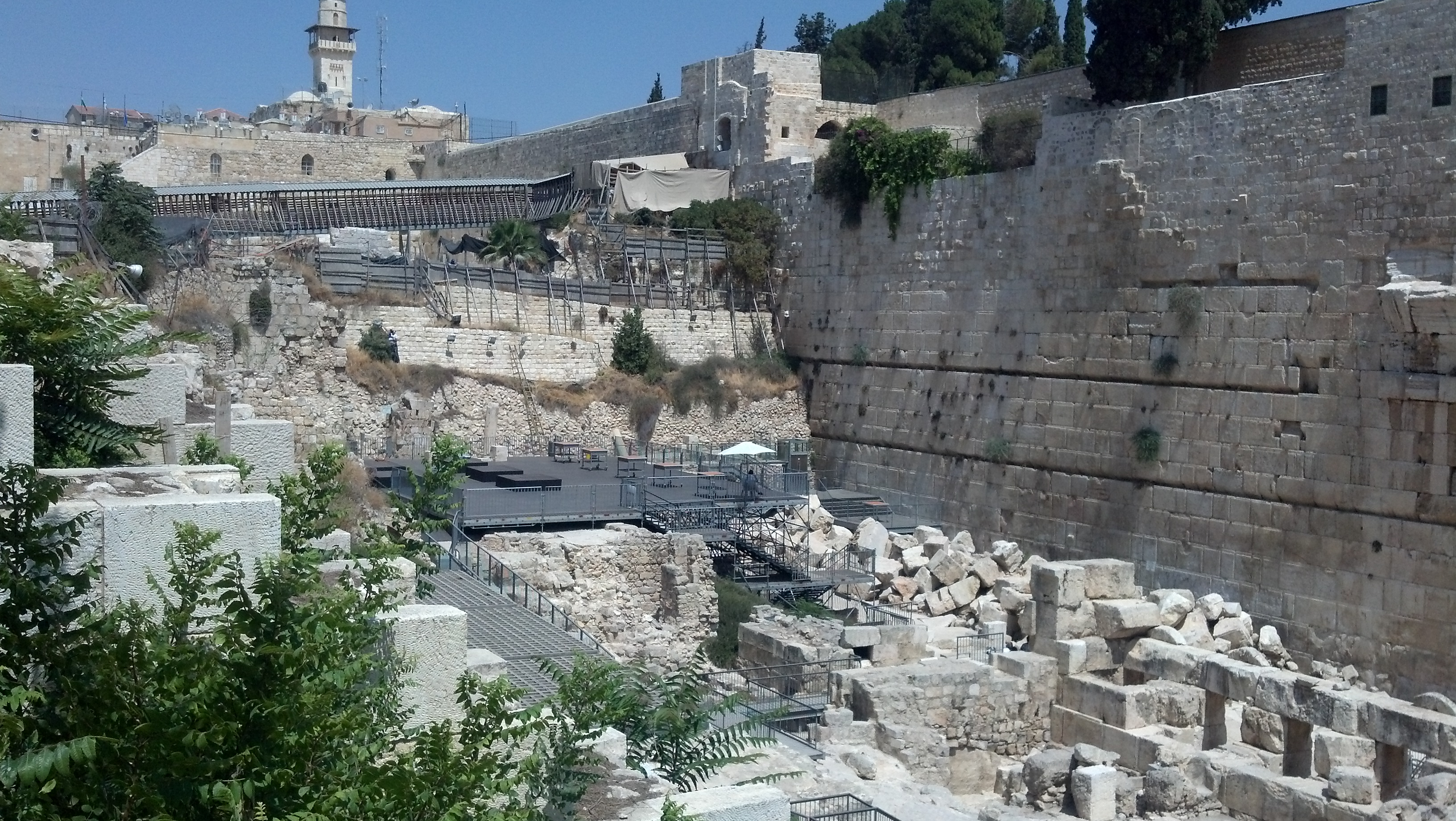
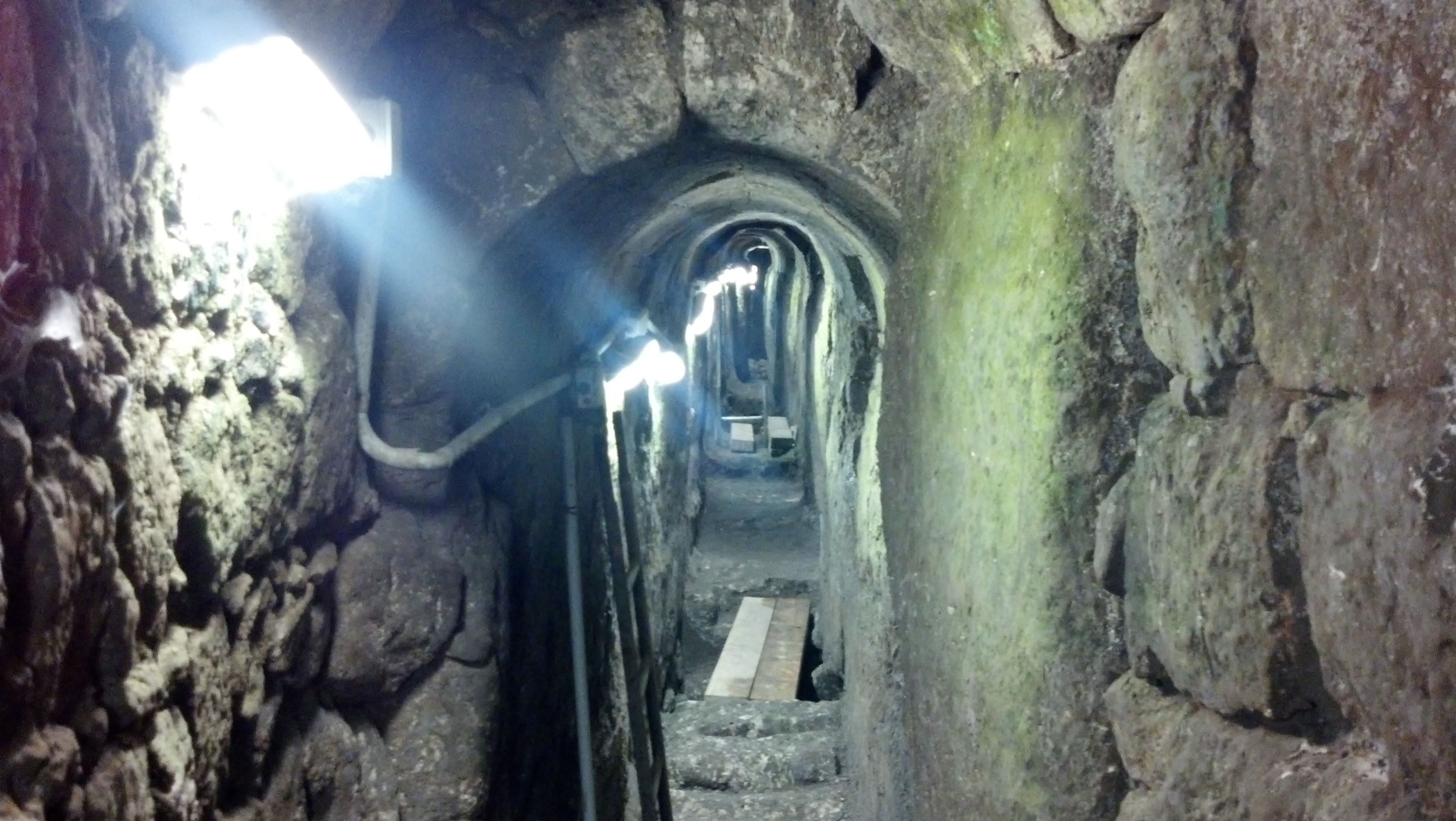
Archaeological activities are often an inseparable part of the political struggle over Jerusalem. The administration and control of different excavation sites, the presentation of the finds, and the historical narrative told to the visitor are all central parts of the struggle over the Old City, which in essence is a large archaeological site.
This report presents a survey of the most important archaeological sites that have been excavated or expanded in recent years. We will show how the excavators’ conduct at these sites, located in the central and most politically sensitive areas of Jerusalem’s Historic Basin, served to advance the political goal of Judaizing Jerusalem, at a significant cost to the Palestinian population that shares the city’s space.
Download the full report Archaeological Activities in Politically Sensitive Areas in Jerusalem’s Historic Basin as a PDF file

Archaeological Activity in the Old City: Political and Religious Consequences
Introduction
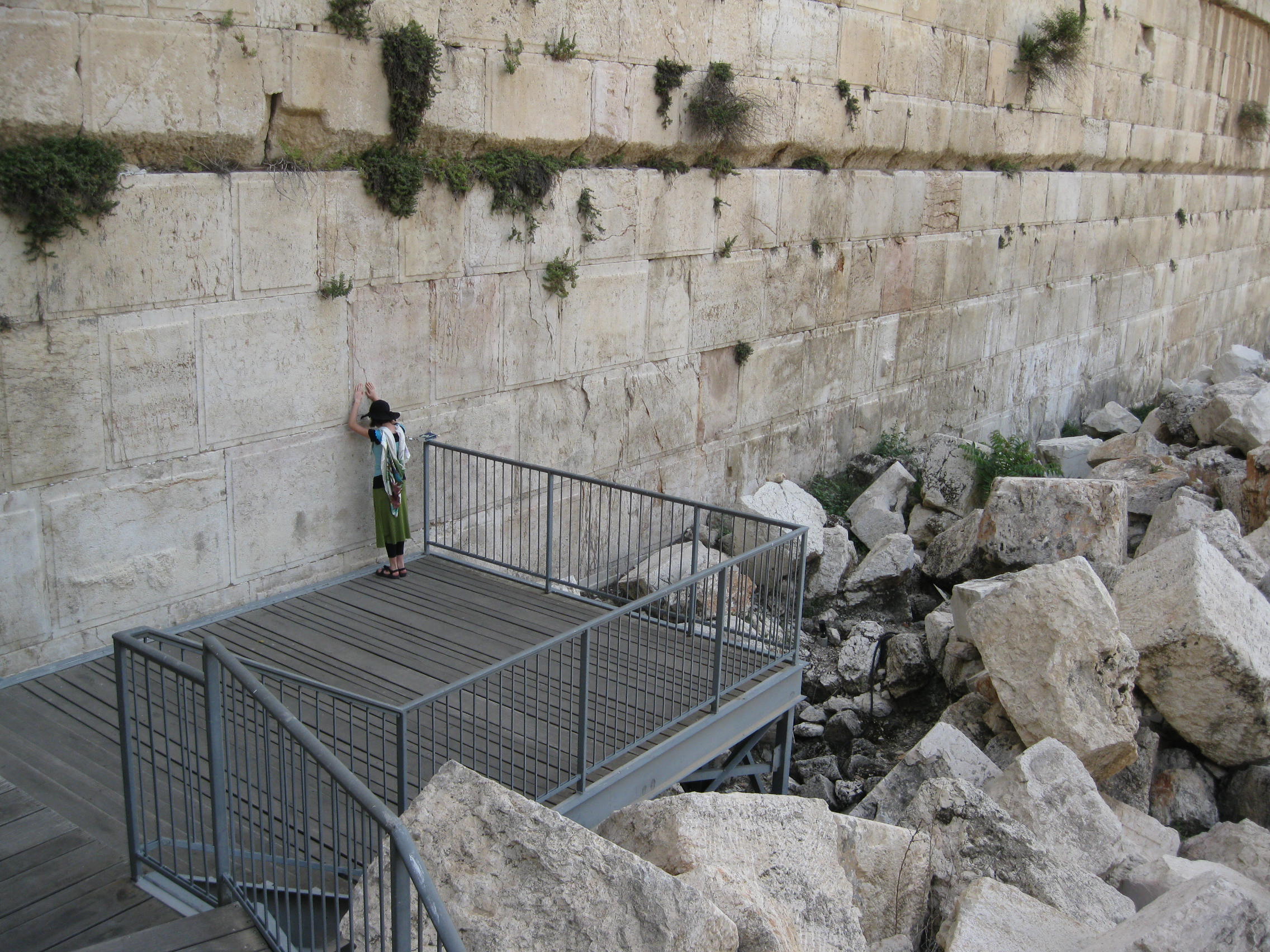
In recent years ancient sites in Jerusalem have become part of the general political and religious struggle around holy sites, particularly in the areas surrounding the Temple Mount/Haram al-Sharif. Growing tensions around Jerusalem’s ancient sites are indicative of a process of radicalization in the city. In examining the transformations occurring in antiquities sites—e.g. their use for religious ritual, national ceremonies, or tourism—one must carefully account for the fine distinction between Jerusalem as an ancient city and Jerusalem as a holy city. Oftentimes, the difference between an antiquities site and a holy site is in the eyes of the beholder. For example, Israel decided that the Western Wall is a holy site, while the southern wall – which is really a continuation of the Western Wall – is part of an archaeological park. Nevertheless, the government’s decision does not prevent tens of thousands of believers to treat the southern sections of the Western Wall as integral to the holy site and partake in its sanctity.
To download the report Archaeological Activity in the Old City: Political and Religious Consequences as PDF file
Any physical alteration in the Old City, from the cutting of a window to the construction of a multi-level structure, requires the approval of the Israel Antiquities Authority (IAA). This jurisdiction was given to the IAA for every site or building defined as ancient (i.e. extant prior to 1700). The assumption is that any physical change affects the historical character of the city and therefore the IAA has the authority to determine development needs as they relate to antiquities (if and what will be built atop ancient remains) and the scope of their preservation. Organizations and individuals with political and economic interests wishing to alter the face of the Old City require the IAA’s support and consent.
In this document, we examine the main organizations that are active in the antiquities site as well as in locations where ancient history and sanctity intersect, and analyze the political consequences of their activities. We demonstrate some of the ways in which archaeological sites undergo a process of sanctification or where the religious identity of a site is strengthened. When considering Jerusalem’s history, one cannot separate the religious and the historical narratives. However, reinforcing the religious narrative has a decisive impact on how the visitor understands the city’s importance. This in itself is not evidence of growing religious extremism; however, when analyzing the location and goals of archaeological excavations and the way in which they are presented to the public, what emerges is a picture of a city in the process of religious intensification.
At the end of the document we consider ways to balance sanctity, history, and residential needs and realities. Given the situation in Jerusalem, the need to strike a balance among these three elements is becoming more essential than ever.
Antiquities in the Basement: Ideology and Real Estate at the Expense of Archaeology In Jerusalem’s Old City
Introduction
The present volume is a series of abstracts based on longer reports by Emek Shaveh which draw on internal documents of the Israel Antiquities Authority (henceforth: IAA),[1] obtained under the Freedom of Information Law. While the information we received is partial, it is sufficient to present an up-to-date general picture of the IAA excavations in Jerusalem’s historic basin.
This volume focuses on the Western Wall Plaza and its surroundings. It considers four sites excavated over the past decade by the IAA: “Beit Strauss” (The Strauss Building) (Chapter 1, Map Site 1); The Davidson Center and its Archaeological Park (Chapter 2, Map, Site 2); Ohel Yitzhak Synagogue (Chapter 3, Map, Site Three); and “Beit HaLiba” (HaLiba Building) (Chapter 4, Map, Site 4). The fifth chapter deals with the overall planning of the Western Wall Plaza. The documents discussed in the text are presented at the end of the file of each Hebrew Chapter (they are not translated into English). In addition, we used various sources, such as protocols from planning committees. We corrected typos in transcripts of planning committees’ meetings, but without changing the meaning (for example, in one discussion, Aelia Capitolina appeared as “Aina Batolina”). Our comments and additions appear in square brackets.
This is for the most part a professional archaeological report. It deals with the policy of the IAA and the manner in which it excavates and conserves antiquities, which are the cultural property of the public and future generations. However, the archaeology in the Old City, at the Western Wall Plaza adjacent to the Temple Mount/Haram al-Sharif is also a key part of the political struggle over the future of Jerusalem. Decisions of where to excavate, for what purpose, and how to present the sites following excavation, are weighty decisions that have an impact on the political conflict between Palestinians and Israelis, in which each side seeks to demonstrate and perpetuate its historical right to the city.
The manner in which the IAA researches and presents the past at the Western Wall Plaza fosters an impression, among the public, of ancient Jerusalem as a site of religious importance to one nation only. The present report shows how the decisions of the IAA often arise from extraneous considerations that have nothing to do with archaeology. It shows how the IAA collaborates with the entrepreneurs (such as the right-wing organization Elad and the Western Wall Heritage Foundation), and tries to adjust its activities to serve their ideology. The description of what takes place behind the scenes in the Western Wall Plaza area, as well as in the IAA excavations at the Givati Parking Lot (A Privatized Heritage, November 2014), shows that this is a routine modus operandi rather than exceptions to the rule.[2]
Read the abstracts report Antiquities in the Basement: Ideology and Real Estate at the Expense of
Archaeology In Jerusalem’s Old City
Download the report Antiquities in the Basement: Ideology and Real Estate at the Expense of Archaeology In Jerusalem’s Old City as PDF file
General Background
The Western Wall Plaza as we know it today was created in 1967 following the destruction of the Mughrabi Quarter. The section of the Western Wall used for prayer, was placed under the auspices of the Ministry of Religion, and the area south of the Mughrabi Bridge became an archaeological excavation site.[3] The Ministry of Religion began excavating the Western Wall Tunnels secretly in 1969, without involving archaeologists, and only years later were archaeologists Dan Bahat and Meir Ben-Dov added as supervisors.[4] The crowning glory of these excavations was the penetration of the rabbi presiding over the Western Wall, Rabbi Getz, in 1982 into the Temple Mount in search of the Temple artifacts, under the pretext of placing a Holy Ark there.[5] In 1968, Benjamin Mazar began excavating the area south of the Mughrabi Bridge, and subsequent excavations followed. In the 1990s, the IAA developed the area as an archaeological park and built the Davidson Center– a museum featuring the archaeology of the area.
To date and for many reasons that cannot be enumerated here, the State of Israel has never approved a master plan for the Old City.[6] As a result, receiving a building permit (conditioned on proving ownership of the land) became an impossible mission for most (Arab) residents. Building without a permit is a criminal offense. Thus, a situation has arisen that affects not only the local residents, but also municipal and governmental agencies that are active in the Old City. They all act without an approved master plan. While various overall plans for the Western Wall Plaza were proposed during the tenure of Mayor Teddy Kollek (the best known of which is the Safdie Plan), none were implemented.[7]
In 2004, the Mughrabi Bridge collapsed, and the need to restore it opened the way for a new series of attempts to construct new buildings and expand existing ones in the Western Wall Plaza. The Mughrabi Bridge, which serves the police and non-Muslim visitors entering the Temple Mount/Haram a-Sharif compound, was not rebuilt for various reasons, but in a petition on the matter, the court determined that a comprehensive plan was necessary for the entire Western Wall Plaza. Meanwhile, however, a number of projects were already in the works, initiated by the Western Wall Heritage Foundation. This organization, which operates under the auspices of the Prime Minister’s Office, was established in 1988 and was vested with the responsibility of managing and developing the Western Wall.[8] The projects that the foundation advanced at the Western Wall Plaza include the expansion of Beit Strauss and the construction of Beit HaLiba (HaLiba building). In addition, the foundation continues to advance the excavation of tunnels and underground spaces under the Plaza and under the Muslim Quarter, the installation of elevators between the Western Wall Plaza and the Jewish Quarter, and other projects. The rise in scope of the foundation’s activity is related to political changes in Israel. The days of Oslo are over, and the government in power, which is right-wing, has allocated considerable budgets for activities in East Jerusalem, some of which reach the coffers of the Western Wall Heritage Foundation. In addition, activities by private organizations with a right-wing ideology in the area have increased. These organizations were politically marginal in the past, but today they are directly or indirectly sustained by state budgets, and enjoy complete cooperation with the municipal and state authorities. South of the Western Wall Plaza, most of the activity is sponsored by Elad Foundation (a right-wing settlers organization which runs ‘City of David” archaeological site in Silwan/City of David), which is expanding its reach from Silwan into the archaeological park and the Davidson Center. North of the Western Wall Plaza, activities are carried out by Ateret Cohanim or the Moskowitz Foundation, which work for the advancement of Jewish settlement in the Muslim Quarter.
These organizations operate without transparency, and therefore, the sources presented here enable only a limited glimpse at what is transpiring in their projects.[9] In recent decades, there has also been a change in the involvement of the IAA in the area. The Western Wall Plaza is an active sacred site, to which the Israeli Antiquities Law (1978) does not apply.[10] The Ministry of Religion therefore could have in the past prevented the involvement of the Israel Antiquities Authority’s predecessor, the Israel Department of Antiquities and Museums, for example, in the excavation of the Western Wall Tunnels. In 2005, following a government decision to invest hundreds of millions of shekels in the development of archaeology and tourism in East Jerusalem, the IAA became a key player in the development of the historic sites and a sort of a contractor for The Western Wall Plaza Foundation. At that time, there was also a change in the nature of the IAA’s involvement in the area. Earlier, development work would take place without archaeological excavations or through sporadic inspection (not by official IAA inspectors). Nowadays, the IAA inspects and excavates prior to each project, but at a cost of accommodating the developers’ ideologies and granting them governmental and scientific legitimacy.
The IAA quotes the importance of the scientific discoveries in these excavations as justification for carrying them out; but important findings will be exposed in any broad-scale excavation in this antiquities-rich area. The excavations are essential whenever a building plan is approved; but the IAA’s decision whether to support a building plan should be independent, not governed by non-archaeological considerations (such as receiving a budget for excavating or supporting the developers’ ideological agenda).[11] The likelihood of discovering impressive finds does not justify the overall policy of the IAA and cannot conceal the massive influence of considerations that have no archaeological relevance on the activities of the IAA at the Western Wall Plaza.
[1] Another report based on internal IAA documents dealt with excavations at Silwan: R. Greenberg, A Privatized Heritage: How The Israel Antiquities Authority Relinquished Jerusalem’s Past”, 2014. On ethics and excavations in East Jerusalem, see R. Greenberg, 2009, “Extreme Exposure: Archaeology in Jerusalem 1967-2007”, Conservation and Management of Archaeological Sites 11, 262-281; G. Suleimani, “Israeli Archaeology in the Old City of Jerusalem,” 120-135 in E. Pfoh and W. Whitelam, eds. The Politics Of Israel’s Past. Sheffield, 2013.
[2] In the interest of proper disclosure: The author of this report took part in the writing of an academic report on figurines at Beit HaLiba. The report was completed and submitted in 2009, at which time none of the documents discussed here were known to him.
[3] To learn more about the period following 1967 and the war by religious groups against archaeologists, see U. Benziman, A City without a Wall, 1973.
[4] M. Ben-Dov, The Western Wall (Heb.), Jerusalem 1981; ibid., The Temple Mount Excavations, (Heb.), Jerusalem 1982.
[5] S. Raz, The Kotel Rabbi: The Life of Rabbi Meir Yehudah Getz, 2003, Jerusalem, 265-319; Yiftach Getz, “The Attempt to Find the Temple Beneath the Temple Mount, according to the Diaries of Rabbi Getz,” speech delivered at the “2014 Discovering the City of David Conference – Ramat Rachel,” https://www.youtube.com/watch?v=QBrFc8ymNyE.
[6] On Israeli politics and East Jerusalem, see M. Amirav, Jerusalem Syndrome (Heb.), 2007, Carmel Publishers; H. Cohen, The Market Square is Empty: The Rize and Fall of Arab Jerusalem 2007; A. Cheshin et al, Separate and Unequal, The Inside Story of Israeli Rule in East Jerusalem, Harvard University, 1999; Dumper, M. 1997, The Politics of East Jerusalem, New York.
[7] On illegal building see N. Merom, “Planning Trap”, “Ir Shalem” pamphlet, Jerusalem 2004; On the various plans for the Western Wall Plaza, see K. Rosenblum, “Jerusalem of Dreams,” Haaretz, May 15, 2013; A. Nitzan-Shiftan, “Stones with a Human Heart,” Theory and Criticism 38-39, 2001; M. Jacobson, “The Western Wall is Also Praying, ‘Leave Me Alone,’” August 9, 2011, YNET online; K. Cohen-Hattab, “ Holiness, Nationalism and Tourism: The Shaping of the Western Wall Plaza in Jerusalem after the Six-Day War,” Peraqim be-Geographia 75 (2010); and Slae, B. et. al. “Heritage and Space in the Planning of the Jewish Quarter of Jerusalem and its Restoration, 1967-1975,” Cathedra 145, 26-39 (all sources in Hebrew).
[8] M. Rapoport, “The Most Explosive Place in the City,” Haaretz, March 8, 2008 (Heb.); http://www.thekotel.org/content.asp?id=90
[9] Our report does not cover planning or architectural critique. On the secrecy of planning in Israel see E. Zandberg, “The Architectural Conspiracy of Silence,” Haaretz, February 12, 2007
[10] On the holiness of the Western Wall, see O. Aderet, “Prayers, Notes and Controversy: How a Wall Became the Western Wall,” Haaretz, May 14, 2013.
[11] On the excavations and findings in this area see: O. Grabar and B.Z. Kedar, eds. Where Heaven and Earth Meet: Jerusalem’s Sacred Esplanade. 2009, Austin.
Selectively Sacred: Holy Sites in Jerusalem and its Environs
In this document, we examine how the Israeli government authorities and legal system address the issue of holy places. The government, legal and judicial authorities in Israel attempt to reconcile a variety of components, namely the historical principles that they inherited from the Ottomans and the British, the fundamental rights of equality and freedom of religion, and international legislation, with the longstanding policy of the governments of Israel: preference for and expansion of holy sites for Jews throughout the country and particularly in Jerusalem. As will be shown, the Israeli legislative and judiciary system is committed – wittingly or unwittingly – to validating the intensive political activities by successive Israeli governments geared towards solidifying and strengthening the Jewish identity of the holy sites.
The “Holy Land” is a term that relates to Israel/Palestine, which originated, as far as we know, in the Byzantine period, during the 4th c. CE. The holiness attributed to this geographical area by billions of believers around the world has an effect on the Israeli-Palestinian conflict, and attracts much international involvement. Most of the holy sites in Israel, also considered archaeological sites, are holy to more than one religion (the holiness of a place is maintained for years despite ethnic, cultural and religious shifts in the composition of the population, a fascinating phenomenon, an analysis of which is beyond the scope of the present paper).
The system of laws and regulations dealing with the list of holy sites in Israel, and defining holy sites and balancing the various religious interests, is based on decisions that trace back to the Ottoman Period. Israel passed the Protection of Holy Places Law – 1967, inter alia in order to allay international critique regarding the annexation of Jerusalem. Only in 1981, in parallel to the legislation of a “basic law” declaring Jerusalem the capital of Israel, were regulations passed regarding the preservation of sites holy to Jews. These regulations included a list of 16 such sites. Apparently, it was no coincidence that laws and regulations relating to the holy sites were instated in parallel to historical decisions by the government relating to the status of Jerusalem. To this day, these laws serve to present Israel as responsible for upholding the rights of the members of the various religions at the sites in its territory. At the same time, at the sites themselves, extensive activity is being carried out to strengthen an exclusive Jewish identity, even at the cost of excluding members of other religions.
Since many holy sites are also antiquities sites there is, ostensibly, a conflict of interest between public bodies that are in charge of the preservation of antiquities, and religions entities, which aim to render these places as dedicated sites for the conducting of religious ceremonies. Despite this, however, it seems that in the reality of contemporary Israel, the Israel Antiquities Authority and the religious entities collaborate, and together are changing the holy sites. This process has particularly been accelerated at the holy sites of Jerusalem, and is changing the character of the city and pushing other religions aside.
Read the full report Selectively Sacred: Holy Sites in Jerusalem and its Environs
Download the full report Selectively Sacred: Holy Sites in Jerusalem and its Environs as PDF file


Guiding Principles for a Jerusalem Antiquities Master Plan – Proposed Policy Paper
June 2016
Introduction – Guiding Principles
Jerusalem is an historic city and disputed territory. The city comprises diverse layers and cultures, is considered holy by three faiths, is populated with residents and contains an active urban environment. The conflicts between different groups within the city, along with attempts to maintain a shared life, are an essential, ongoing component that is ever present within the urban environment and among its residents.
The steering committee that has gathered here includes professionals from varying disciplines, with varying knowledge and ethical codes. The different bodies of knowledge and practices represented within this committee are the basic and vital tools for the treatment, design, presentation, interpretation, preservation and management of Jerusalem’s material and spatial historical resources.
Presently, there are processes taking place in Historic Jerusalem that dramatically affect the city’s physical and ideological textures. A large number of entities with different and sometimes competing agendas are involved in these processes, leading to a multiplicity of projects that are not founded on an all-inclusive view or on a sustainable plan that respects the multilayered heritage of all the city’s residents and visitors.
It is, therefore, our duty to shed light on ethical and civil issues and formulate professional standards for the management of the treasured heritage sites of the historic basin, including for archaeological development, conservation, planning and building. These standards will ensure the sustenance and preservation of Jerusalem’s unique symbolic resources, as they are manifested in its archaeology, landscape and architecture, as well as the free and equal access for residents, citizens and visitors. Protecting Jerusalem’s history from one-sided, nationalistic, religious, corporate or economic exploitation, is crucial.
Boundaries/Scope of the Discussion
The committee’s recommendations refer to the Old City and its surrounding area, that is, the scope referred to as the Historic/Holy Basin, between Mt. of Olives in the East, Gehenna in the South, the Mamilla area in the West and the Tombs of the Kings in the North.
Download the full document Guiding Principles for a Jerusalem Antiquities Master Plan – Proposed Policy Paper as PDF file
Committee recommendations for management of excavations, conservation and development of sites and building on top of antiquities in the Historic Basin of Jerusalem
- Since 1968 intensive archaeological activity has been taking place in the Holy Basin, followed by conservation projects and site development projects. This trend has escalated even more over the last decade. The Antiquities Law, intended to protect antiquities from development activities, is used by developers in Jerusalem as a tool to advance one-sided, irreversible development lacking in public oversight and carried out without regard for the planning and building law. We recommend that in each case where an archaeological excavation constitutes an initial phase of development for tourism or other purposes (infrastructure, public or private construction, and others), standards adopted by planning laws are to be applied: comprehensive approach to the excavation and development plan and the implementation of extensive impact studies which take into account the heritage and the built environment, public health and safety, and the social and economic implications. All these – prior to executing the excavation.
- Excavations, conservation and site development projects in the Historic Basin are to be part of a transparent master plan that will be subject to public discussion. They must take into account activity in other areas of the city. A broad and comprehensive view will prevent wasteful activity such as the establishment of a series of competing visitors’ centers without any real need. From a cultural perspective, a broad and comprehensive view will enable the empowerment of one narrative at one site and another narrative at another site, providing a balanced and adequate expression of the different cultural periods that shaped Jerusalem in the past, as well as the mosaic of communities existing today.
- Public inclusion processes regarding excavations in Historic Jerusalem are to be applied, and strict inspection procedures are to be in place, as a condition for continuing work year to year. Clandestine or classified excavations will not be permitted in this framework and all building and development projects will be published and subject to public inspection.
- For each excavation in the Historic Basin, except for clear cases of treatment of health and security hazards, an excavation license (and not an authorization, as is currently accepted), granted after consulting with independent professionals will be required.
- The Old City of Jerusalem is a world heritage site according to UNESCO and was even included in the list of World Heritage Sites in Danger. The state of Israel ratified the UNESCO Convention concerning the Protection of the World Cultural and Natural Heritage and is thereby committed to observe its guidelines and instructions. One of the instructions is that the state is to notify UNESCO in advance, through the Foreign Ministry or the Israel UNESCO committee, regarding significant activities on the site that are culturally influential (modifications, exacerbation, improvements, construction, demolition, large excavations, conservation and development activities, etc.). Excavation initiatives, be it for scientific or development purposes, undoubtedly fall under “significant activity” that require reporting.
- Separation between the regulator (the entity that inspects the excavation and conservation) and the executor of the excavation and conservation in practice shall be aspired to. For this reason, execution of excavations and conservation projects by a government authority must be not the rule, but the exception.
- Dismantling ruins during an excavation shall be prohibited, and the act of dismantling shall be defined as an act of conservation, which entails the constraints applicable to the process of conservation.
- Each conservation act, of a site or an object, must be based on the reversibility principle (restoration of the original state) as much as possible.
- Conservation and development plans must be presented to the public and to all essential stakeholders in Jerusalem’s Historic Basin: residents, visitors, representatives of the different faiths and the various religious orders, and local and international professional organizations. The entire abovementioned public shall be part of the decision making process concerning excavations, conservation and building over antiquities within this area.
- Excavation and conservation acts must be undertaken carefully, modestly and in a restrained way, in order to leave options open for changes in the future, in keeping with the advancement of technology and knowledge.
- Each conservation act, such as preparation of spaces for public, business or tourism activity must preserve the authentic/original architectural and historical context, and refrain from significant changes to the structures and/or from creating artificial links between structures which were used for different purposes or dated to different periods. The conservation activity must be of service to the residents’ needs, especially those living in close proximity to the sites that have undergone conservation.
- Excavations and conservation activities are accompanied by activities which determine the visitors’ experience at the site. Conservation, signposting, demonstrational films, tours and educational activity at the site must meet professional standards and be free of tendentious slants. These activities must faithfully represent all remains that were excavated and are found at the site, and deal with the complex social and historical mosaic which characterizes Jerusalem.
Survey shows Palestinian residents of East Jerusalem experience the archaeological activities as a tool to undermine Jerusalem’s national and religious identity
Issues of identity, religion and recognition are much more critical to East Jerusalem residents than what the Israeli right wing and centrists would have us believe. A new survey shows that East Jerusalemite Palestinians are more concerned by Jewish ascension to the Temple Mount/Haram al-Sharif and archaeological excavations than problems such as lack of infrastructure and denial of construction permits.
The survey[1], commissioned by Emek Shaveh, asked East Jerusalem residents what issue concerns them the most. 67% chose Jewish pilgrimage to the Temple Mount. 44% quoted archaeological excavations while denial of construction and lack of infrastructure were ranked as matters of most concern only by 41% and 30% respectively. For an op-ed on the subject see Why Israeli Archaeological Excavations Worry Palestinians.
[1] The survey was carried out by the Smith Institute. 500 individuals made up the sample representing Israel’s adult population (Jews and Muslims, ages 18 and older). Sampling error – 4.5%. Among East Jerusalem residents 150 individuals made up the sample representing the Arab population of East Jerusalem. Sampling error – 5.6%. Some of the questions were identical, some were different.
Read the detailed Survey on archaeological sites and excavations in Jerusalem as a PDF file .
Back to top