
Sebastia: community-led heritage preservation in a threatened cultural landscape
Carla Benelli
For nearly two decades, the Palestinian association Mosaic Centre and the NGO Pro Terra Sancta, in partnership with the Municipality of Sebastia, Al-Quds University, the Palestinian Ministry of Tourism and Antiquities and local families, have carried out one of the most sustained and community‑oriented heritage interventions in the West Bank. The work has sought to reconnect the archaeological site with the living community, preserve the multilayered cultural landscape, and create economic opportunities for local residents in a context of political fragmentation and contested jurisdiction.
Sebastia is a complex heritage zone divided, after the Oslo Accords, between Areas B and C, with the village under Palestinian civil control while the archaeological acropolis remains under full Israeli military administration. This division has produced decades of mismanagement, exclusion of local residents from decision‑making, and repeated attempts to isolate the acropolis, frame the site primarily through a biblical‑national narrative, and sever it from the Palestinian town. Against this backdrop, this conservation effort began as an effort to stabilise cultural heritage, empower local actors, and resist the narrative that the community plays no role in safeguarding the site.
A community‑based conservation model
From the outset, a conservation team headed by architect Osama Hamdan, a renowned conservator, adopted an integrated, community‑based approach grounded in: shared decision‑making with the municipality, landowners and local institutions; capacity‑building through the training of young workers, students and artisans; small‑scale, high‑quality conservation of historic buildings; the reconnection of village and acropolis; the creation of livelihood opportunities linked to cultural tourism; and the strengthening of local identity and cultural rights. Our objective was never simply to enhance individual monuments, but to embed heritage preservation within the social and economic life of the community.
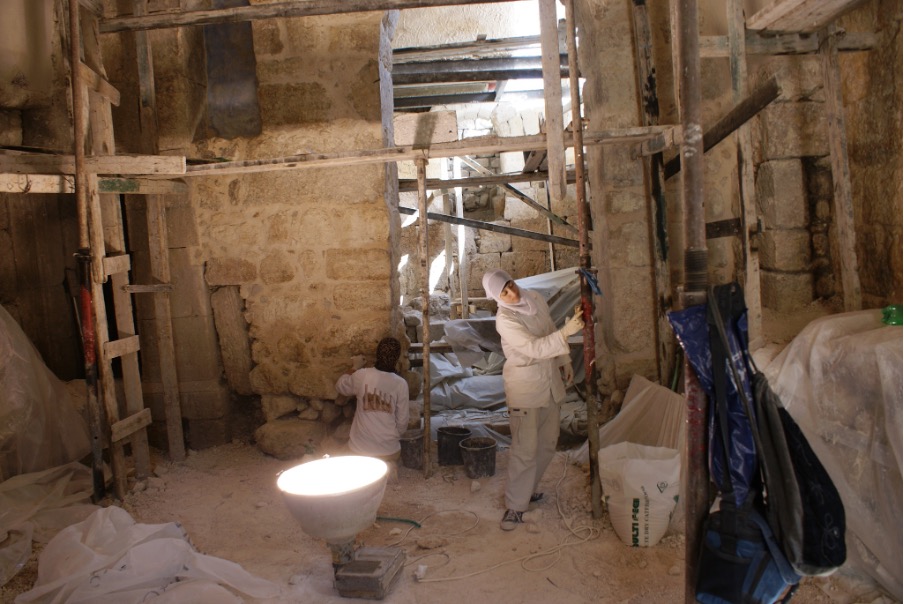
Conservation of historic buildings in the historic core of Sebastia village, (2005-2008)
Because Palestinian authorities are effectively barred from undertaking conservation on the acropolis, efforts have focused on the historic core of the village and its immediate surroundings. Between 2005 and 2020, thanks to public and private funds from Italy, Switzerland, Germany and Belgium and a continuous collaboration with the Palestinian Ministry of Tourism and Antiquities and Al‑Quds University, we carried out numerous conservation interventions. These included the preservation and enhancement of Crusader‑period structures near the mosque of Prophet Yahya, former cathedral of St John the Baptist; the consolidation and reuse of abandoned historic houses; the creation of community‑run facilities for visitors such as guest rooms, information points and services; the enhancement of streets, courtyards and public spaces; and preliminary archaeological excavations integrated with conservation works. Over time, many structures at risk of collapse were rescued, and degraded areas were transformed into socially and economically useful spaces.
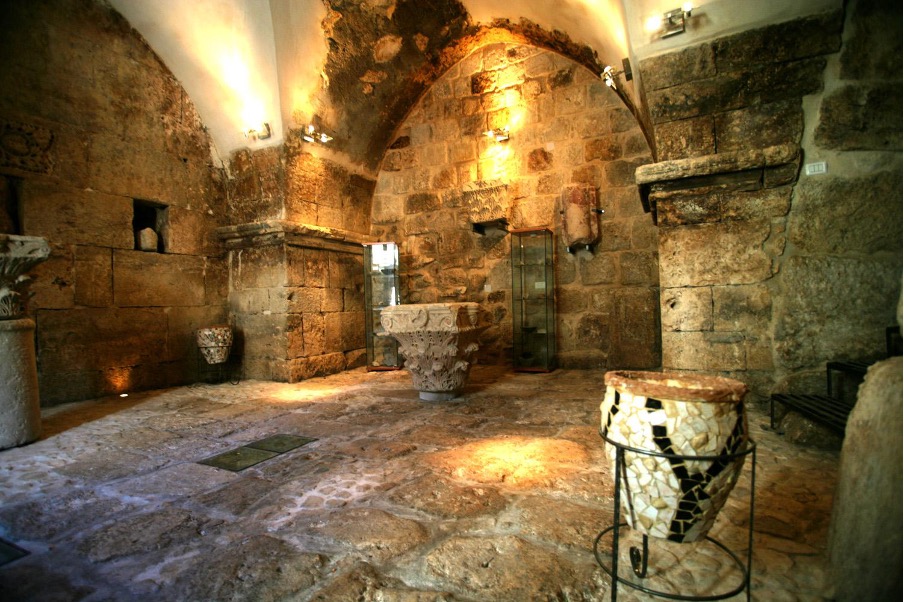
Crusaders building in the historic village of Sebastia after conservation works.
Archaeology, knowledge and local participation
All archaeological excavations were conducted jointly with Al‑Quds University and the Palestinian Ministry of Tourism and Antiquities, employing and training local students and workers. This marked a clear departure from last-century foreign expeditions, which relied on local labour but offered no educational or community benefit. The excavations uncovered vaulted rooms, mosaics, and a fortified tower belonging to the Byzantine and Crusader monastic complex, as well as new evidence for the medieval settlement named Casale Sancti Johannis Sebaste.
The results enriched the historical narrative of the village and strengthened residents’ awareness of their ancestral heritage. Importantly, archaeological research was not presented as a purely external, scholarly exercise, but was discussed with local stakeholders, property owners, and youth groups, reinforcing the idea that Sebastia’s deep past and its contemporary community are inseparable.
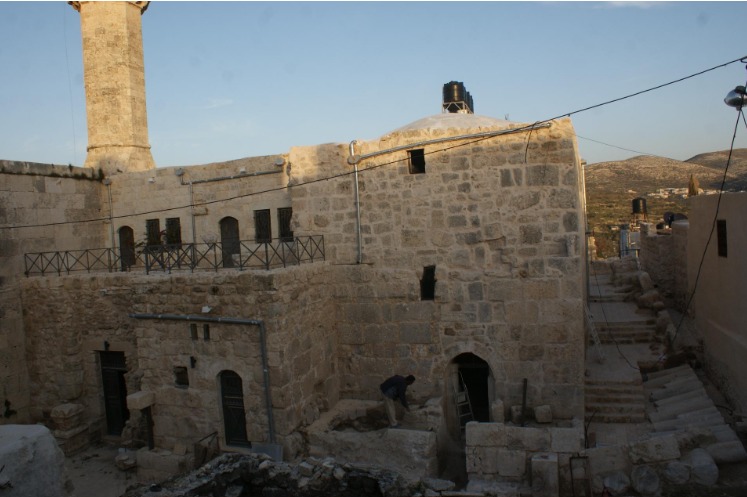
Crusader tower in Sebastia village, south of the Mosque of Nabi Yahya (formerly a Crusaders era cathedral) following conservation works in 2009.
Tourism, visibility and local economy
A major obstacle from the outset was the fact that the village had long been excluded from the official tourist itinerary, which was limited to a visit to the acropolis. The village’s significant historical heritage, including the burial site of John the Baptist – Prophet Yahya – which in the past had been one of the key stops on Christian and Muslim pilgrimages, was completely overlooked. The team worked to rebuild the connection between the village and the archaeological site by creating community‑run hospitality facilities, improving the interpretation of village heritage and organising cultural events and awareness programmes with local schools and associations. In this way, Sebastia has been framed not simply as a destination for external tourists, but as a heritage community in which residents define and use their heritage as a resource for social cohesion and dignified economic development.
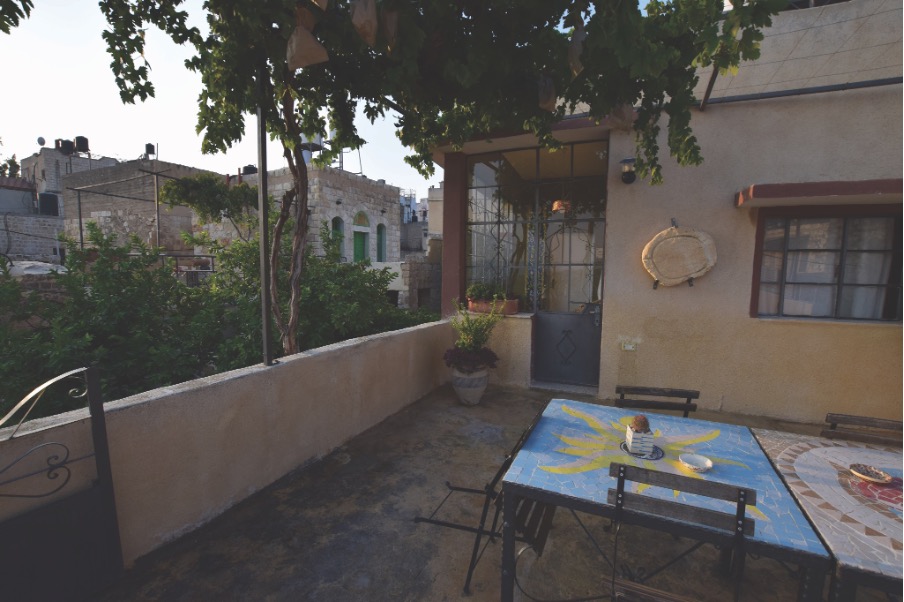
Mosaic guesthouse following conservation work in village of Sebastia
These efforts gradually increased both local and international visitors to the village, restoring at least part of the tourism economy that had been lost during the years of closures and the Second Intifada. Women’s associations developed local products – such as food, soaps and ceramics – closely linked to the identity of Sebastia, while young residents trained as guides and heritage workers. In this way, cultural heritage became a tool for dignity, economic opportunity and social cohesion, not just an object of external consumption.
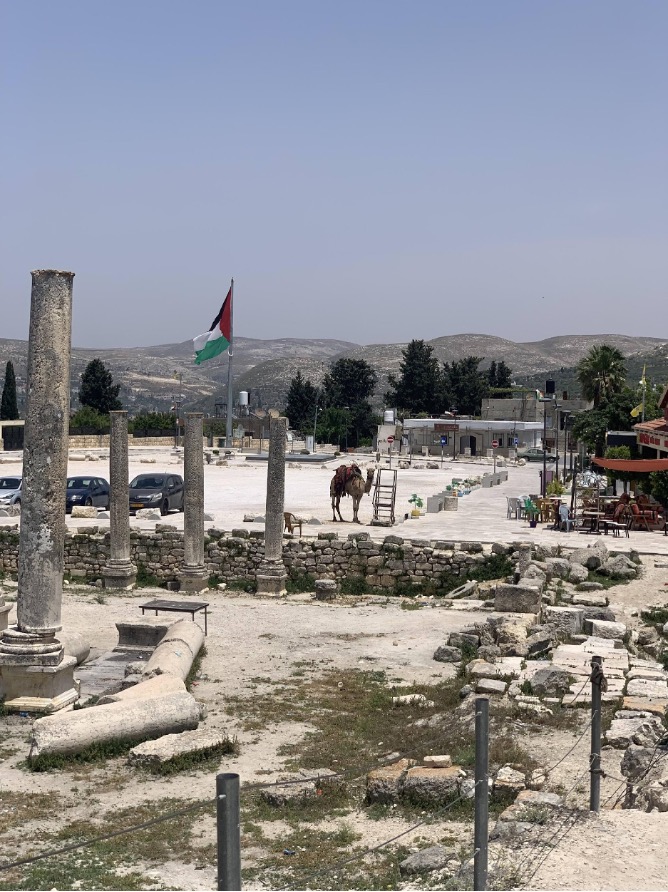
Archaeological site of Sebastia slated for expropriation with Palestinian flag and village homes in the background.
Why current expropriation policies are so damaging
The recent order for the confiscation of approximately 1,800 dunams of privately owned land around the archaeological site of Sebastia marks a critical turning point. Beyond its immediate legal and political implications, it raises a fundamental question for heritage professionals: can an archaeological site be meaningfully protected when it is detached from the village that has inhabited, cultivated and cared for it over generations.
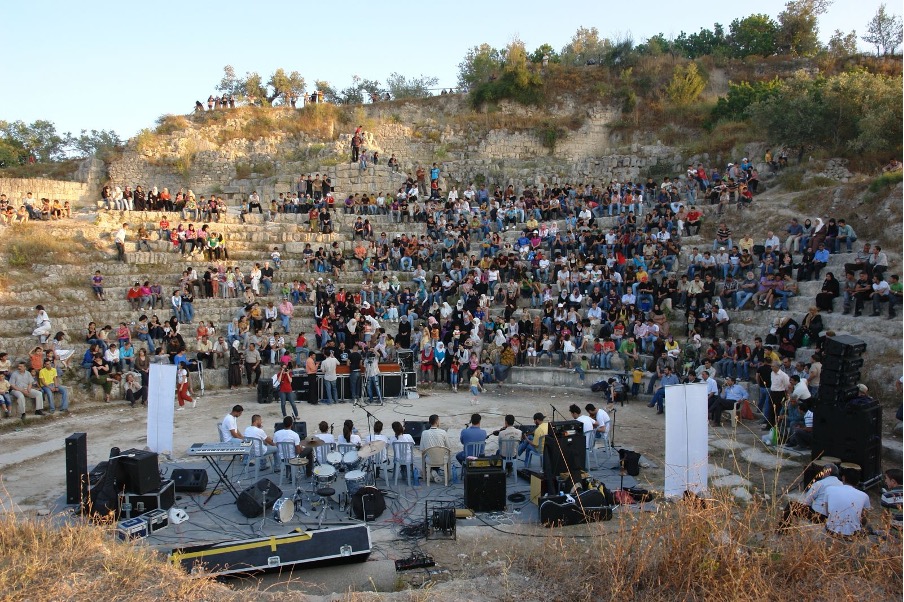
Community event at the Roman Theatre, 2009. The theatre is part of the archaeological site expropriated by Israel.
Sebastia is not an isolated monument frozen in time. It is a multi-layered archaeological complex embedded in a historic Palestinian village whose social, economic and cultural life has long been intertwined with the ancient remains. The hilltop acropolis, the mosque of the Prophet Yahya (the former Crusader cathedral over the traditional tomb of John the Baptist), the traditional houses and the surrounding olive groves form a single cultural landscape, in which archaeological strata and everyday practices are constantly interwoven.
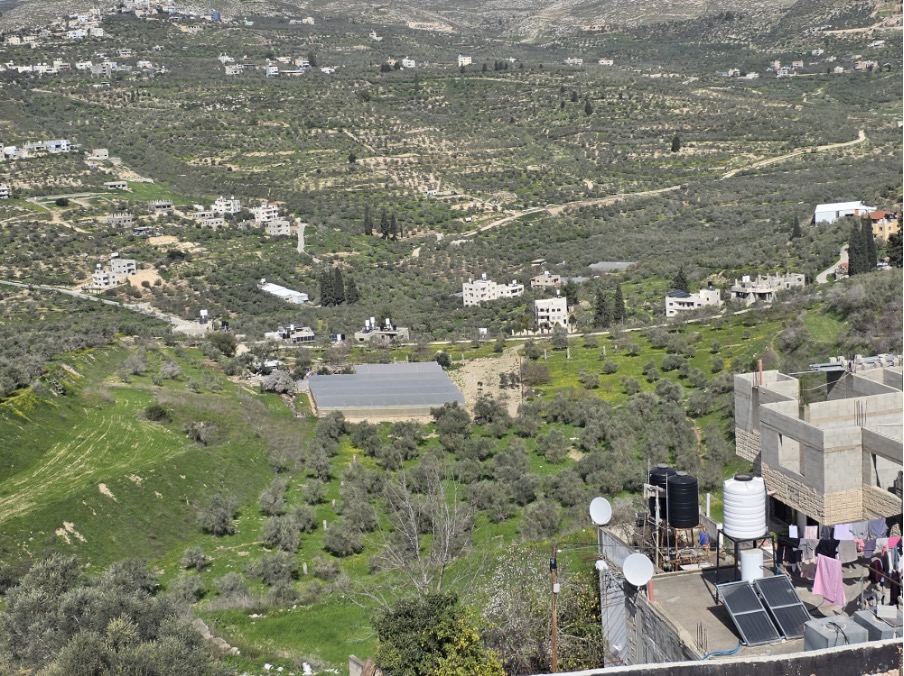
Privately owned olive groves in Sebastia, expropriated by the Israeli Civil Administration in February 2026 for the purpose of creating an Israeli tourist attraction.
These new land confiscations and heritage‑related plans seek to disconnect the acropolis from the village and to reframe Sebastia primarily as a biblical site within a wider settler‑led tourist landscape. From our perspective as practitioners on the ground their impact is clear: they threaten to undo almost twenty years of community‑based work, to marginalise local actors and to fragment a cultural landscape that has always included both the archaeological remains and the living community.
The inclusion of olive groves and agricultural plots in confiscation schemes jeopardises the primary source of income for many families and disrupts the agricultural dimension of the landscape that conservation projects have helped to value and interpret. Increased security infrastructures and unilateral tourist development risk sidelining community‑run hospitality and training initiatives, replacing them with a top‑down model in which residents are reduced to passive onlookers. It is also worth stressing that the removal of the local community as an active guardian of the site represents a direct threat to the integrity of the archaeological heritage itself: experience shows that sites “protected” by exclusion rather than inclusion are far more vulnerable to neglect, unauthorised access, and the progressive loss of contextual knowledge that only a living community can preserve.
Broader significance
The Sebastia experience – with its emphasis on capacity building, participatory conservation and multi-layered narratives – demonstrates that Palestinian communities are deeply engaged with their heritage and that locally rooted projects can successfully conserve complex archaeological landscapes. It shows that inclusive heritage management is essential to prevent the manipulation of These principles are firmly grounded in internationally recognised frameworks, including the Council of Europe’s Faro Convention (2005), which recognises the right of commarchaeology in politically contested contexts and that an archaeological site of outstanding significance can be better cared for when the local civil society is involved. unities to their cultural heritage, and UNESCO’s Recommendation on the Historic Urban Landscape (2011), which calls for the integration of living communities in the conservation of heritage sites. Heritage professionals, institutions and organisations must recognise the dangers of the current expropriation process and support models in which the archaeological site and the present-day community remain inseparable.
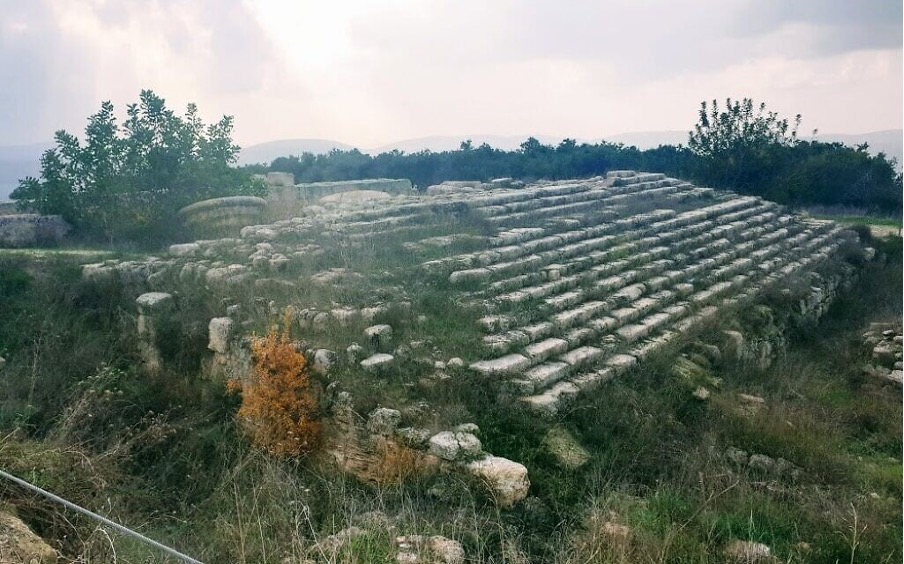
Temple of Augustus, part of archaeological site expropriated by the Israeli Civil Administration in February 2026 for the purpose of developing an Israeli tourist attraction cutting the Palestinians off from their lands and cultural heritage.
Far from being a neglected site, Sebastia has benefited from years of dedicated Palestinian‑led conservation, scientific research, community involvement and sustainable tourism development. In a moment when the site faces unprecedented pressures, this history provides clear evidence that the village and its institutions have been among its most committed guardians, and that any credible strategy for protecting Sebastia must place the present‑day community at the centre.